The Pharmacist Who Formulated for Cortisol, and for the Two Minutes a Woman Actually Has
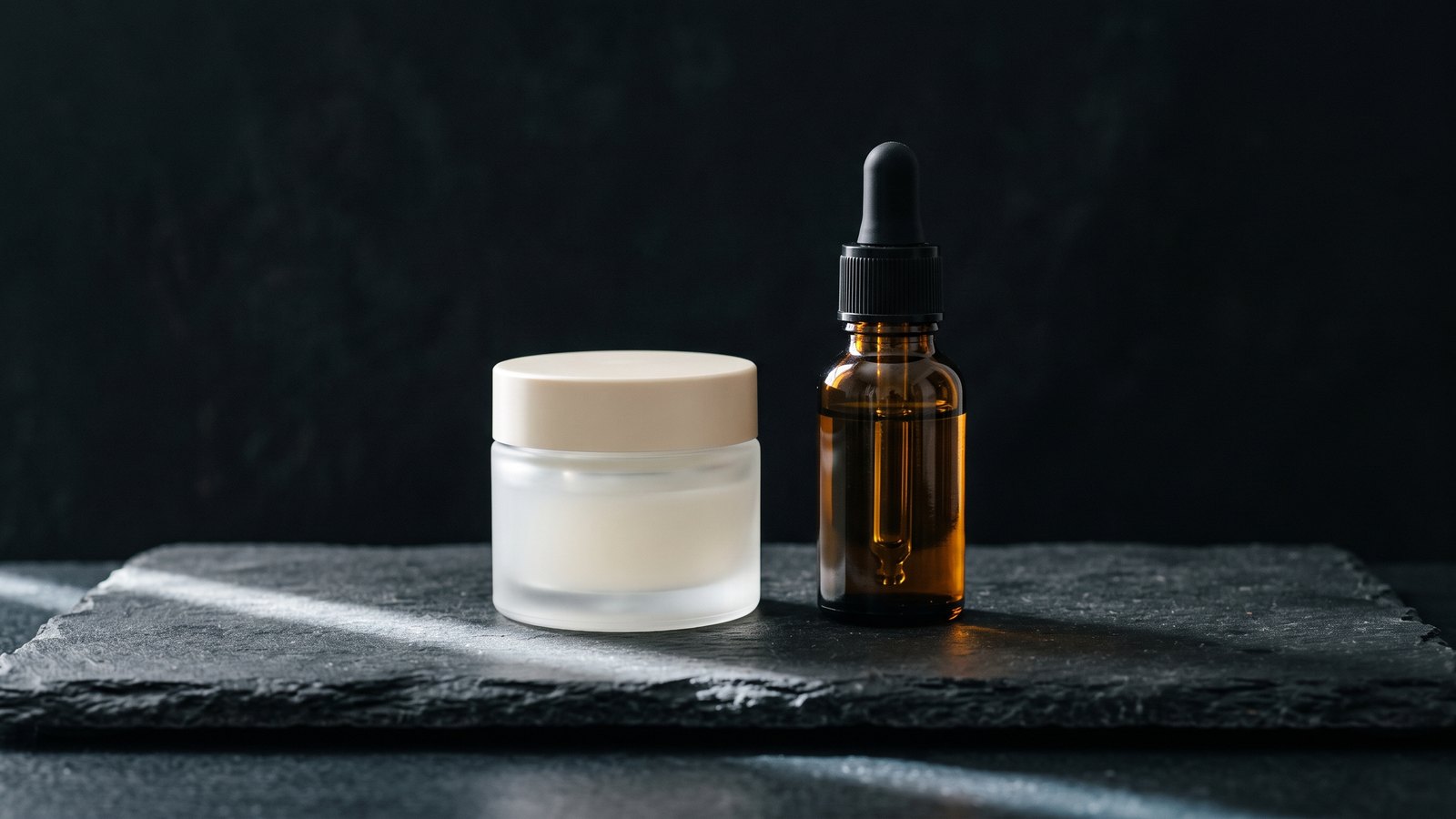
Neurocosmetics has given the industry a new claim territory and a familiar problem: the science is interesting and the routine is long. A Belgian pharmacist built her range around the opposite assumption, that the customer has no time at all.
Valérie Vroome spent her professional life inside other people's laboratories. Johnson and Johnson's consumer division. Pierre Fabre. A spin-off of Janssen Pharmaceuticals, which took her from cosmetics into the medical end of skin. She knew ingredients, she knew the biology of skin, and she describes the mechanism of a molecule crossing into it as a genuine fascination rather than a job.
Then she had cancer, and the thing she could no longer do was hurry.
The world, or whatever, told me that I needed a cancer to learn how to slow down, because I couldn't do anything else than slow down at that moment.
Serenea Cosmetics, which she founded in 2024, is what she built out of that. Standing at Beautyworld Middle East in October 2025, when this interview was recorded, among rows of serums promising ceramides and peptides, she was selling something less tangible and considerably harder to formulate for: a few minutes of a woman's day, given back to her.
The formulation problem underneath the positioning
The wellness framing is easy to dismiss as marketing. The formulation decision behind it is not, and it is the part a product developer should pay attention to.
Vroome's starting point was a category conflict she had lived with in her own bathroom. “I have a lot of creams with very active ingredients, which I like... but the cream is sticky or smelly. I use it because it's good,” she says. “But then I have some creams that I know they're very sensory and that I know the ingredients are meh. But I use them because it's nice, it smells nice, it makes me feel good.”
That is the trade-off almost every skincare developer knows and most ranges resolve by picking a side. High-performance actives tend to bring texture and odour problems. Elegant textures tend to mean lower active loads or heavy encapsulation costs. Brands then either sell efficacy and apologise for the feel, or sell the feel and stay quiet about the concentrations.
Vroome refused the choice, and says the reconciliation took most of the development time. “I took a lot of time to work on the textures, the smell, the perfumes that are in it, but also a lot of time into the ingredients because I wanted it to be also very effective.”
The reason it matters commercially is the second constraint she set: the routine is deliberately short. The brand launched with a day cream, a night cream and a serum, sold today as three rituals rather than a long regimen, Pure Moments, Pure Tranquillity and Pure Luxury, and the range has since added a cleanser and masks. In a category where routine length is the primary upsell mechanism, that is a deliberate cap on basket size.
“I didn't want to have 7 layers... on my skin, because I don't have time for that,” she says. “I'm a businesswoman, I have other things to do.”
The consequence is that every product has to carry more, because there are fewer of them. Sensory quality stops being a finishing touch and becomes a functional requirement, because a customer skipping a step is the failure mode, not a customer buying fewer products.
Cortisol as the organising idea
The range is built around the connection between stress and skin, the territory the trade has started calling neurocosmetics.
“There is a huge connection between the brain and the skin,” Vroome says. “If you're stressed, your skin will be blotchy. But what happens? ... there's an inflammation going on. There is... the cortisol in your skin that diminishes your immunity.”
She describes the range in tiers, with one line intended to calm the skin and another aimed specifically at lowering cortisol in it. The three rituals now on the brand's site follow that logic: hydration and daily protection, a calming ritual built around the skin barrier, and an intensive nourishment ritual. As claim territory, this is more defensible than most wellness positioning, because the underlying biology is real and studied. It is also, for exactly that reason, a claims risk: the distance between supporting skin under stress and anything sounding like a physiological intervention is the distance between a cosmetic and a medicine. A regulatory lead reading this should note that the more precise the mechanism a brand names, the more precise its substantiation file has to be.
Vroome, as a pharmacist who has worked on the medical side of skin, is better placed than most to know where that line sits.
What it has cost, and what is still ahead
The romantic version of this story ends at the fair. The commercial version has not started yet.
At the time of the interview Vroome was distributing the brand herself in Belgium and France. What she was making then were small batches, enough for samples, with the first full production run scheduled for the turn of 2025 into 2026 and dependent on securing capacity at the factory. She was at Beautyworld looking for distribution partners, and chose the Middle East for a specific reason.
“I think it's a good hub between Far East,” she says. “I met people from Japan, from China, etc. But also from Europe. So it's like the good meeting point in between the two worlds.”
That is a small brand's calculation, and an honest one. A single fair in Dubai puts a Belgian founder in front of buyers from two continents at a cost no European roadshow could match. It is also a reminder of how far Serenea still is from the shelf it is designed for. The proposition is complete; the supply chain and the distribution are not.
Why the timing looks less like luck
In this magazine's reading of launches over 2025 and 2026, neurocosmetics has moved from fringe to headline, and stress-and-skin is now one of the more crowded claim spaces in development pipelines. A brand founded in 2024 by a pharmacist who had personally hit the wall the category describes is well positioned, but the position is no longer unoccupied.
What may hold up better than the trend is the constraint. Routine fatigue is, in our observation, a growing problem for skincare, and a short range that treats the customer's time as the scarcest ingredient is a structurally different proposition from a seven-step one wearing calming language. Simplicity is easy to claim and expensive to formulate.
“I really want to inspire women,” Vroome says. “It's okay to feel overwhelmed... but take time for yourself.”
Coming from someone who had to be stopped before she learned it, the line carries more than it looks.
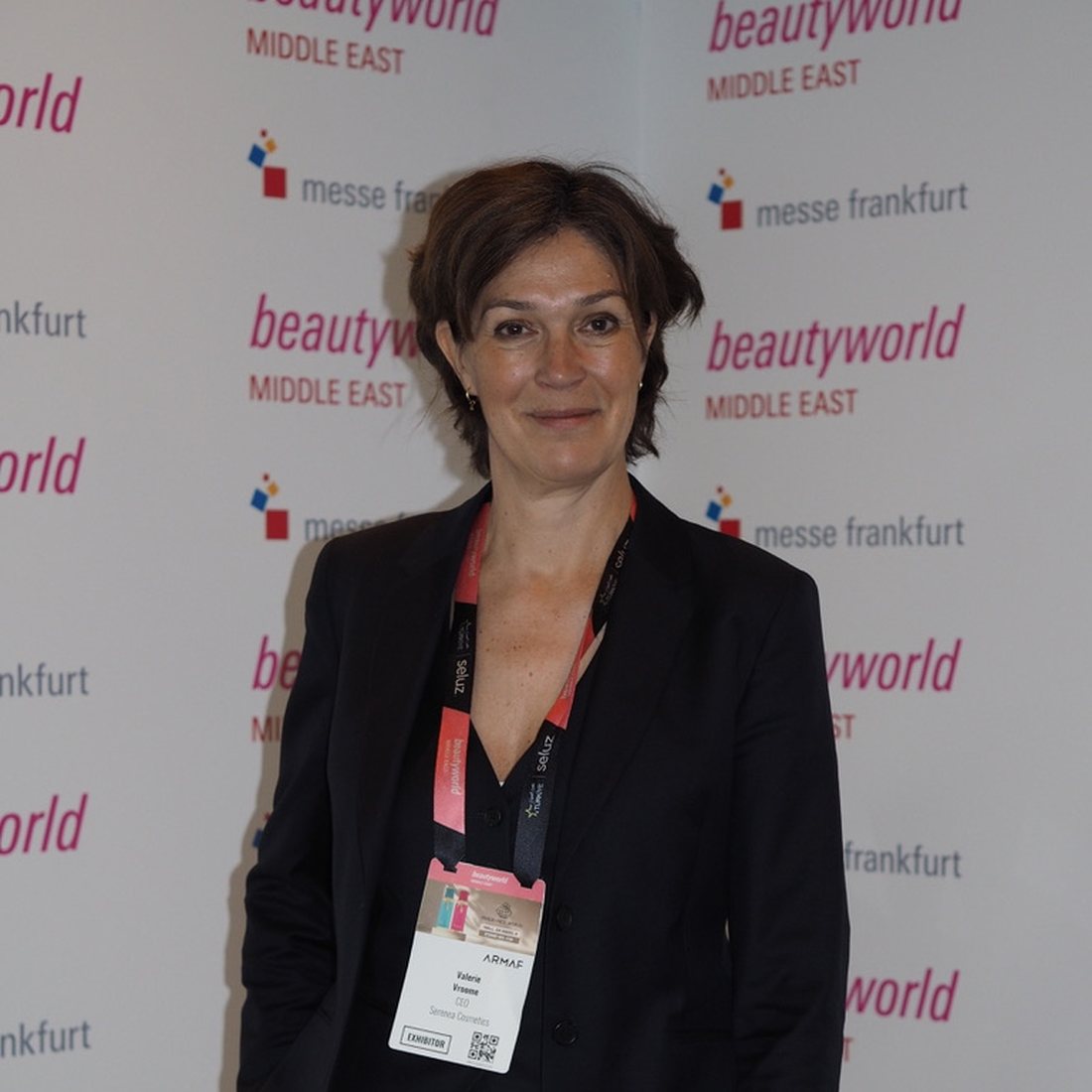
Pharmacist, and Founder and Chief Executive of Serenea Cosmetics, a Belgian skincare brand founded in 2024 around the stress and skin connection. Previously held roles at Johnson and Johnson's consumer division, Pierre Fabre, and a spin-off of Janssen Pharmaceuticals. The range launched with a day cream, night cream and serum, is sold as three rituals, Pure Moments, Pure Tranquillity and Pure Luxury, and has since added a cleanser and masks. At the time of the interview, October 2025, Vroome was distributing in Belgium and France and seeking distribution partners for further markets.